

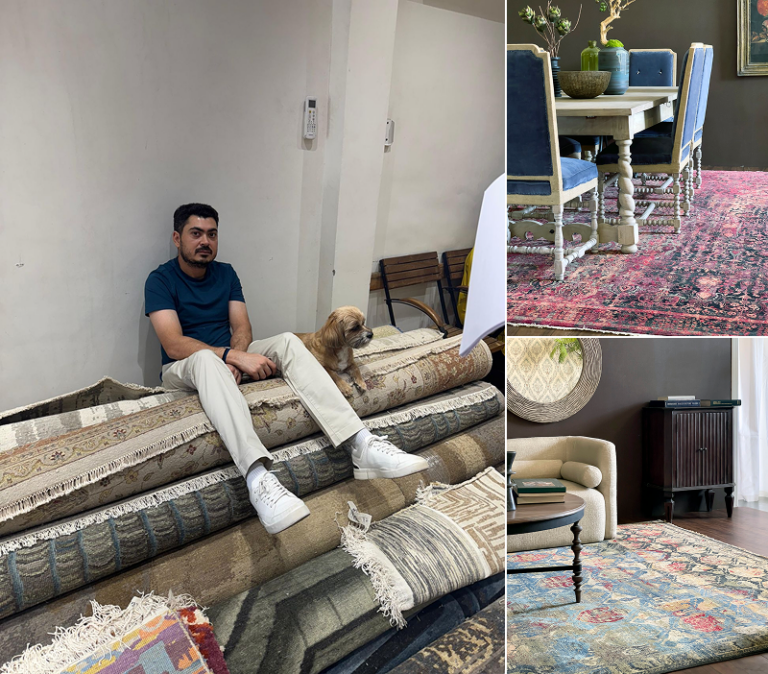
April 6, 2026

Unveiling our vibrant journey through the buzz, stories, and behind the scenes
The most sustainable thing you can do is stop buying things.
But when you do need to buy, buy once.
The home décor industry produces billions of square metres of rugs every year.
Most of them are replaced within 3-5 years not because they broke.
Because they looked tired.
Because trends moved.
Because they were never built to last.
A hand-knotted rug doesn’t work that way.
The structure tightens over time, it doesn’t loosen.
Natural fibres age with dignity.
A good rug at 20 years looks earned, not exhausted.
Sustainability isn’t just about how something is made.
It’s about how long it stays.
A rug that lasts 40 years has a carbon footprint that’s a fraction of one replaced every 5.
At Understorey, we don’t design for trends.
We design for decades.
That’s not a sustainability strategy.
It’s just the honest way to build something.
Today is Handmade Day, and I want to celebrate the people behind the most extraordinary craft in the world.
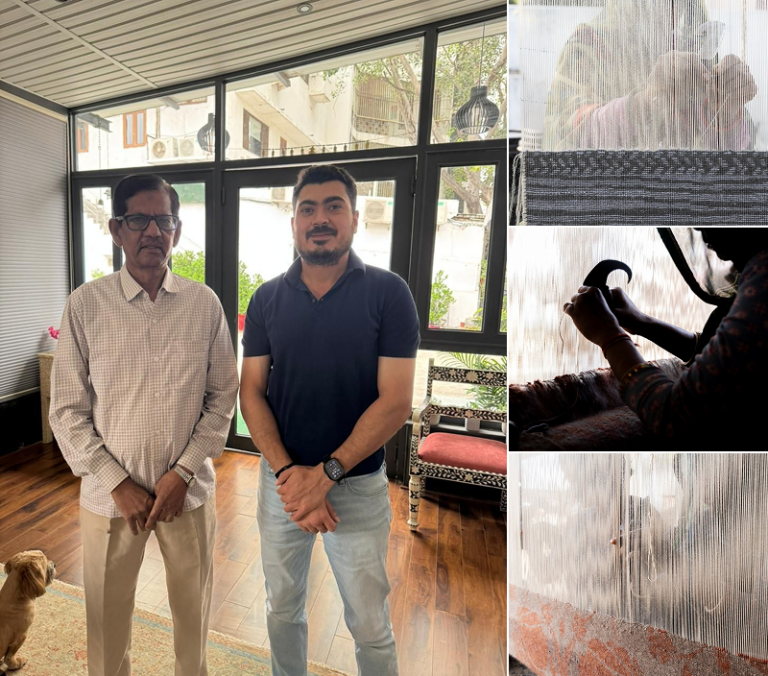
The weavers. 5,000 of them work with us.
They wake up every day and do something that no machine has ever replicated. That no algorithm can approximate. That no shortcut can produce.
They tie 8,000 knots by hand in a single day.
They hold complex patterns in their memory for nine months without losing the thread.
They feel a tension inconsistency in the pile before it becomes visible to anyone else.
That is not a skill.
That is a superpower built across a lifetime.
And the world is beginning to understand what it has.
Buyers who know what exceptional looks like are coming directly to Jaipur.
The conversation around handmade has changed. People are asking better questions. Wanting to know where their beautiful things come from.
Understanding that the object on their floor carries the hours, the patience, and the knowledge of a person who gave their life to one craft.
That shift means everything.
I have spent my life in workshops watching master weavers work.
I am proud to be the custodian of this art form.
Of this knowledge. This heritage. These hands.
To carry forward what my great-grandfather began in 1916 and what three generations built after him is the greatest privilege of my life.
To every weaver who has given their skill, their patience, and their years to this craft – this day belongs to you.
Happy Handmade Day.
📌 Pic 1 (Me with Iqbal ji one of our oldest employees who is our weaving manager)
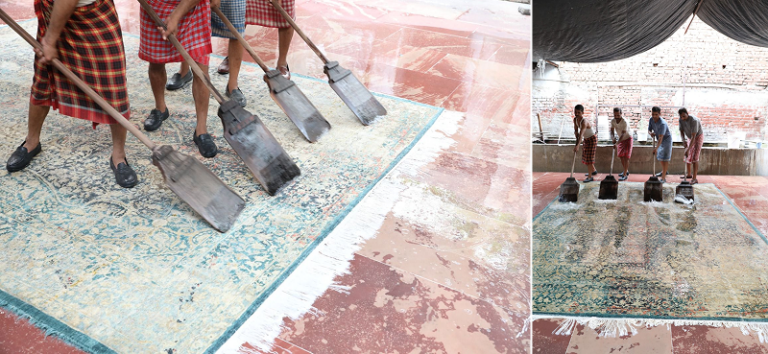
Before you clean your rug, read this.
Most rug damage is not from use.
It is from incorrect cleaning.
Specifically: methods designed for synthetic wall-to-wall carpet applied to a natural-fibre hand-knotted piece.
They are not interchangeable. Not slightly different. Completely different.
▶️ Routine care.
Vacuum once a week, low suction, in the direction of the pile. Run your palm across the surface, with the pile it lies flat, against it there is resistance. Always vacuum with it. No beater brush. Ever.
▶️ Spills.
Blot immediately. White cloth. Never rub – rubbing drives the liquid into the pile and spreads the stain. Cold water for water-soluble spills. For anything else, call the maker before treating.
▶️ Deep clean.
Every 3–5 years. A professional who specifically hand-washes natural fibre rugs.
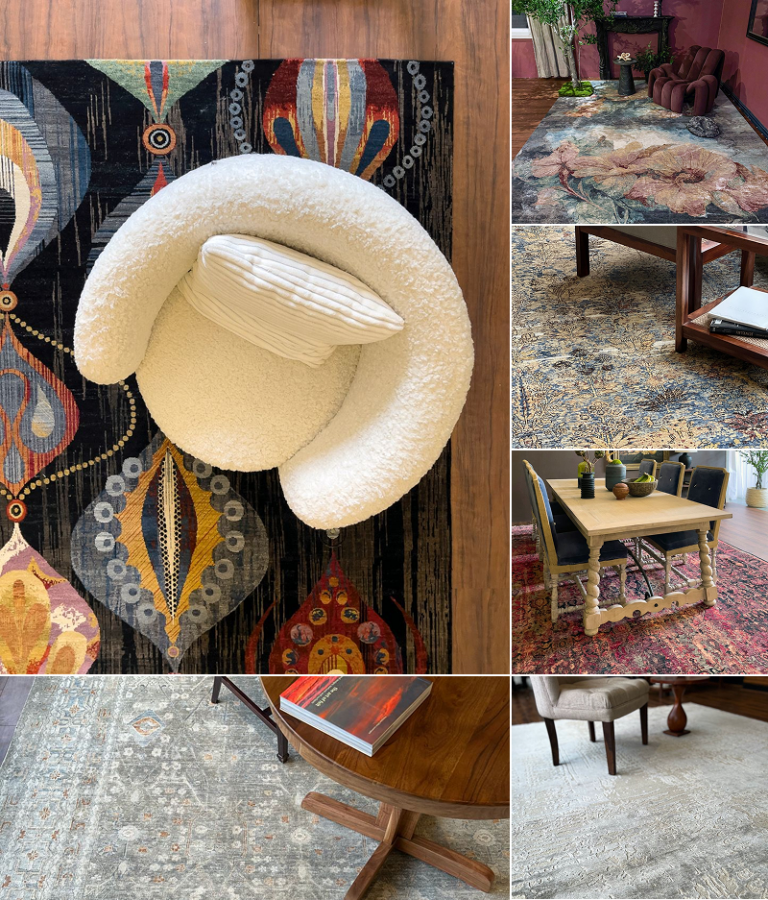
If you are serious about hand-knotted rugs, there is one city you need to understand.
Jaipur.
Alongside Bhadohi, Jaipur is one of India’s great hand-knotted rug clusters. Both have now received Geographical Indication tags, the same kind of protected designation that Champagne has for sparkling wine and Darjeeling has for tea.
That recognition matters.
It means the craft of a specific region is protected, authenticated and traceable to its source.
Global buyers are responding. These clusters are seeing renewed interest from serious buyers across the US, Europe, and the Middle East, buyers who want to know not just what they are buying, but where it came from and who made it.
Provenance has always mattered in art.
It is now mattering in rugs.
A GI tag on a Jaipur hand-knotted rug is not a marketing stamp.
It is a guarantee that what you are holding was made here, by these hands, using knowledge that has been built and refined in this city across generations.
The finest rugs in the world carry a location in their making the way the finest wines carry a terroir.
The soil, the climate, the hands, the knowledge all of it specific to one place.
Jaipur is that place for hand-knotted rugs.
It always has been.
The world is simply learning to say so.
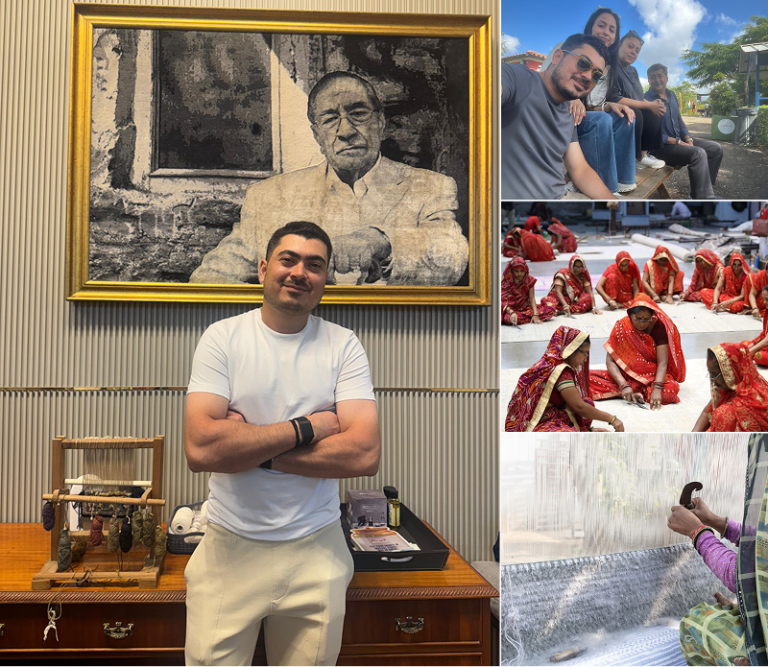
Everyone is talking about building something from scratch.
My story is different.
I inherited a 109-year-old business.
And I want to tell you what that actually feels like.
Every single day I get to walk into a workshop and work alongside some of the most skilled craftsmen in the world.
People who can hold a complex pattern in their heads for fourteen months without losing it. Who can feel a tension inconsistency in the pile before it becomes visible to anyone else. Who create colours and textures and designs that genuinely take my breath away.
That is my workplace.
That is what I get to call work.
Yes, I carry a responsibility that goes beyond numbers. Every decision I make is felt by thousands of people who were here long before me.
But that weight is matched by the privilege.
There is also the question of creativity.
My grandfather expressed it through texture and quality. My father through design and colour. Both found their own language for the same craft.
Now I am finding mine.
And the industry makes that genuinely exciting.
Colours change. Homes change. The way people think about luxury changes. You have to stay ahead, stay curious, keep creating while making things designed to outlast everything around them.
It is the most stimulating creative challenge I can imagine.
I do this because working with the finest craftsmen in the world, creating things of extraordinary beauty, watching art come to life knot by knot is genuinely one of the greatest privileges a person can have.
A startup founder asks: how do I build something that survives?
I ask: how do I honour something extraordinary and make it even better?
That is the question that gets me out of bed every morning.
And I wouldn’t trade it for anything.
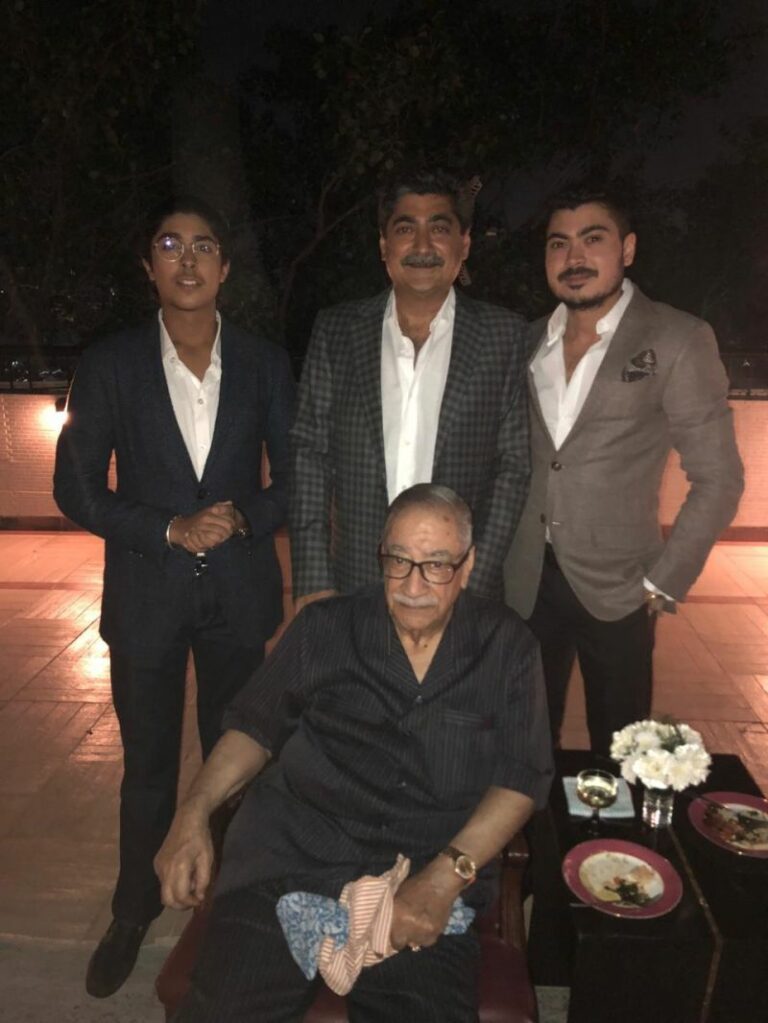
Four generations of my family have dedicated their lives to one of the most extraordinary art forms in the world.
Hand-knotted rugs.
400 years of knowledge. Passed from master to practitioner. Hands on the loom. Knot by knot.
And I believe the best chapter of this craft is still ahead.
Here is what this industry produces today.
Some of the finest rugs made anywhere in the world. Hundreds of thousands of livelihoods across the full supply chain.
Art that outlives the people who make it. Homes that are anchored by something built to last a century.
It is an industry that deserves a stronger ecosystem around it.
What I want to see and what I am working toward is simple.
Vocational training centres in the regions where this knowledge lives.
Schools where young people from weaving communities can learn this craft with the same structure and support that any skilled trade deserves.
Government recognition that matches this industry’s contribution to employment, to exports, to the cultural legacy of India.
The knowledge has always been here.
We just need to build better pathways for it to travel forward.
And what gives me genuine confidence is the shift I see happening right now.
Serious buyers are asking better questions. Designers are specifying with more knowledge. Indian buyers are choosing Indian craft not as a second option, but as the first choice.
Awareness creates demand. Demand creates viability. Viability gives the next generation a reason to learn.
Every rug we make at Understorey is an argument for why this craft deserves to survive.
It needs the ecosystem that its extraordinary art form has always deserved.
Every hand-knotted rug that finds the right home is a weaver who stays.
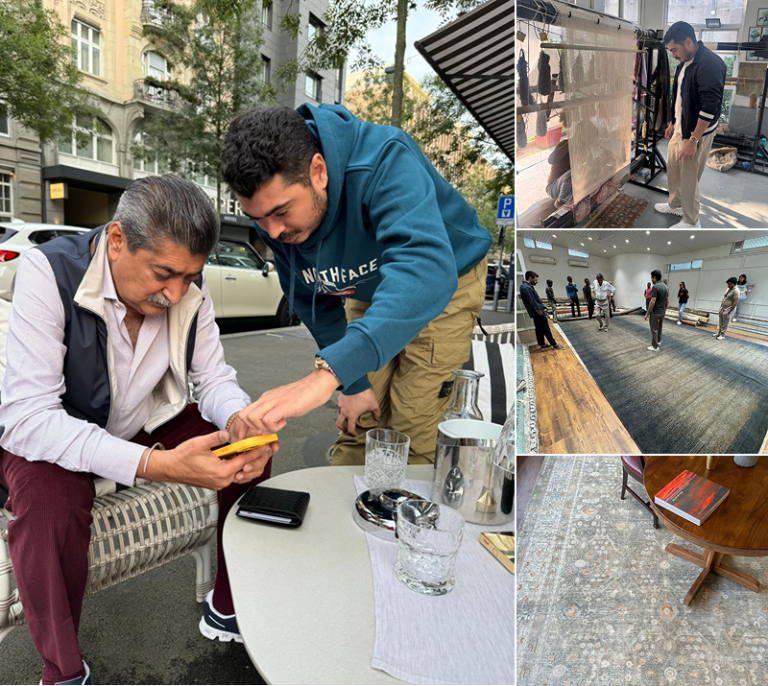
A skill that is not passed forward disappears.
I think about this more than anything else in my work.
The knowledge that makes a great hand-knotted rug possible is not written down anywhere.
It lives in hands. In the muscle memory of a master weaver who has tied 8,000 knots a day for thirty years.
In the eye of a dye master who can see a colour shift before it becomes visible to anyone else. In the accumulated judgment of craftsmen who have spent a decade learning one thing deeply.
When those hands stop, that knowledge stops.
Not eventually. Immediately.
We at Understorey have 3,500 craftsmen. I consider myself a custodian of what they know as much as of what we make.
Paying fairly is the beginning of that custodianship. Not the end.
It also means making the work worth choosing – for the generation that comes after the current one. Making sure young people in Jaipur see this as a craft worth mastering, a life worth building.
We strive to make the best rugs we can because that is what we love.
We make sure the people who make them are valued because we want this craft to exist for generations to come.
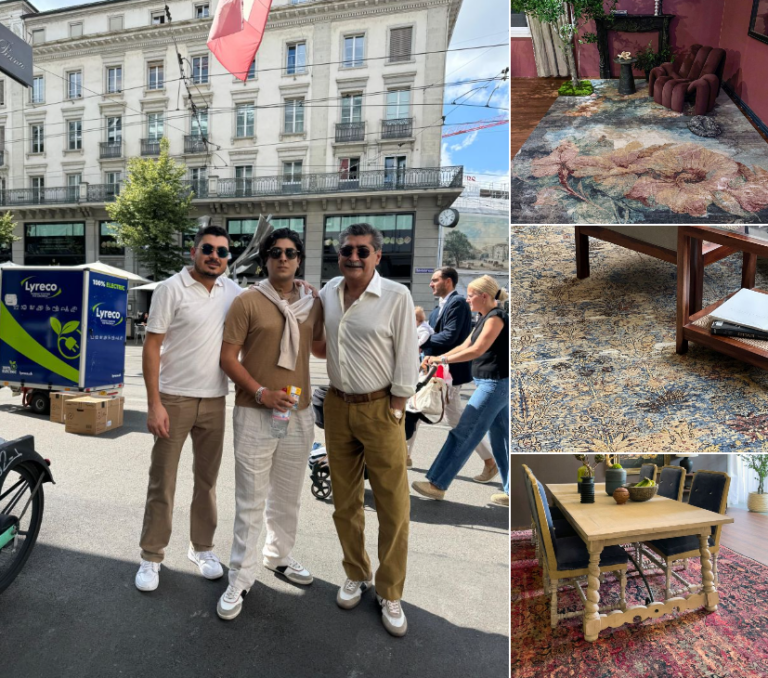
The most beautiful rugs in the world are made in Jaipur.
Not London, New York or Milan.
Here.
For decades, the workshops in this city made them quietly, brilliantly, without stopping. And the world bought them through European showrooms, American design houses, luxury hotels on every continent.
The brands that took this craft global deserved their success.
They had the eye to see something extraordinary. Then they worked hard, for years to make the world see it too. Marketing, storytelling, presence. They did what it takes.
We at SNKE were busy making the rugs.
We never told the story.
That was the gap.
The craft was always here. The wool, the weavers, the knowledge built across centuries, none of it needed to go anywhere to become world class. It already was.
What we didn’t have was the platform or the inclination to say so ourselves.
Now we have both. We at Understorey wish to tell the story of our craft, our weavers, our heritage.
The craft, the artistry was always here.
Now we are ready to show it.
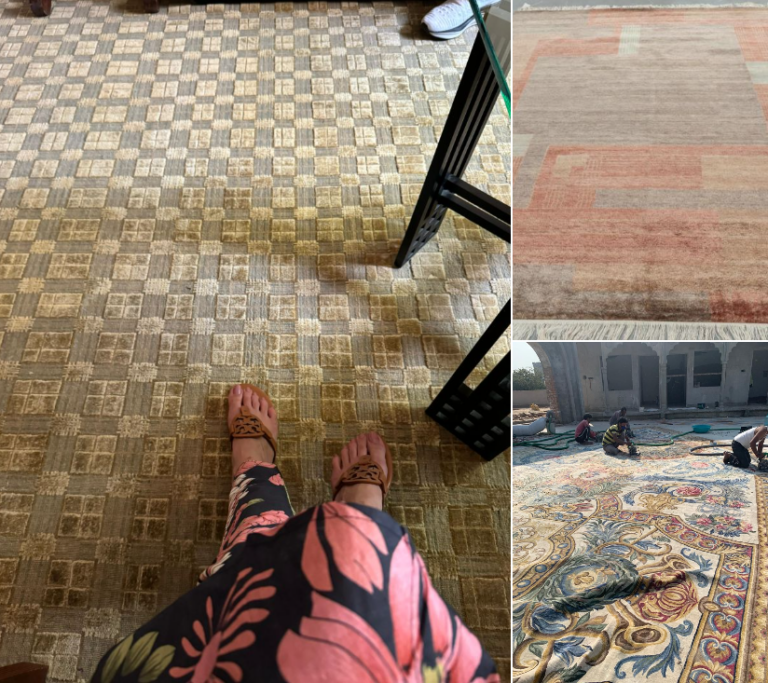
Exclusivity is becoming rarer.
Mass production has made everything accessible.
Today, you can walk into a store and buy the same rug that hundreds of other homes already have.
Same design. Same colours and same size.
Efficient. Affordable. Replaceable.
Now consider a hand-knotted rug.
Higher upfront cost.
📌 But here’s what you’re actually paying for:
No design limits.
No colour restrictions.
No size constraints.
No production repetition.
Even two rugs woven from the same design will never be identical.
Because every knot is tied by hand.
Micro variations happen.
That is character.
Mass production gives uniformity.
Hand-knotting gives individuality.
And in a world where everything is replicated, owning something that cannot be replicated is the real luxury.
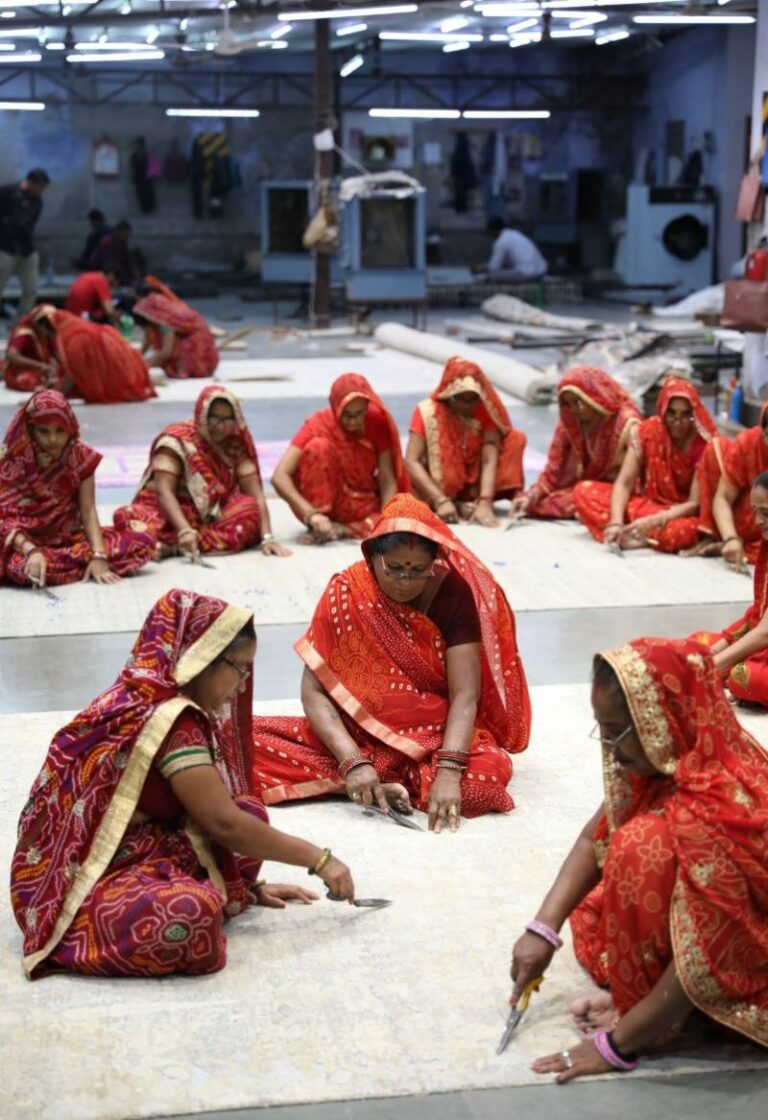
A majority of the weavers in our industry are women.
They wake up before the house does.
They sit at a loom – no motor, no machine doing the work for them. Just their hands, their skill, and a pattern they carry in their head.
They tie 8,000 knots a day. By hand. One at a time.
For months.
Then the rug leaves.
It goes into a showroom in Mumbai or New York or Dubai. Someone walks in, sees it, and feels something they can’t explain.
They never meet the woman who made it.
She never sees the room it ends up in.
She just makes the next one.
I have watched women in our workshops hold patterns in their heads that I cannot hold on paper.
I have watched a weaver catch an error in a design three rows before it would have become visible to anyone else.
I have watched hands move with a speed and precision that no machine has ever matched.
This is not a feel-good story.
This is the industry.
The craft that the world calls luxury, the pieces that end up in the most considered homes, the most celebrated interiors are built on the hands of women who have spent decades mastering something most people don’t even know how to look at.
We talk about heritage. About artistry. About what makes a hand-knotted rug extraordinary.
We should talk more about who is doing the making.
To the women in our workshops, in our family, in this craft across generations :
You didn’t just keep this art form alive.
You are why it’s worth keeping.
Happy Women’s Day.
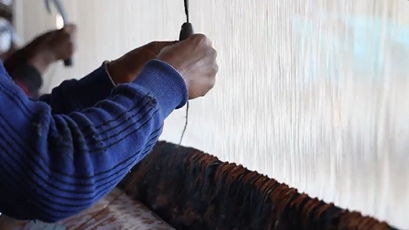
Every hand-knotted rug is a painting. Except the canvas is wool and the brush is a human hand.
When a weaver sits at a loom with a hundred thousand knots ahead of them, every single one tied by hand – that rug will be unlike any other rug ever made.
Even if the design is identical to one made before, the flower on the left will look slightly different from the flower on the right. The tension in the pile will carry the particular rhythm of that weaver’s hands on that day over those months.
This is not imprecision. It is the fingerprint of making.
When the rug is bespoke, when it comes from a client’s imagination, their space, their life – it carries something no machine can approximate.
That rug is a record of a conversation between a person’s imagination and a craftsman’s hands.
The whole world today is chasing exclusivity. People pay premiums for limited editions, for one-of-a-kind pieces, for things that can’t be replicated.
Everything we make is already all of those things. By nature.
Not because we decided to limit production. But because genuine making is inherently irreplaceable.
We at Understorey are not in the rug business.
We are in the business of making something that exists only once.
That is what hand-knotted means.
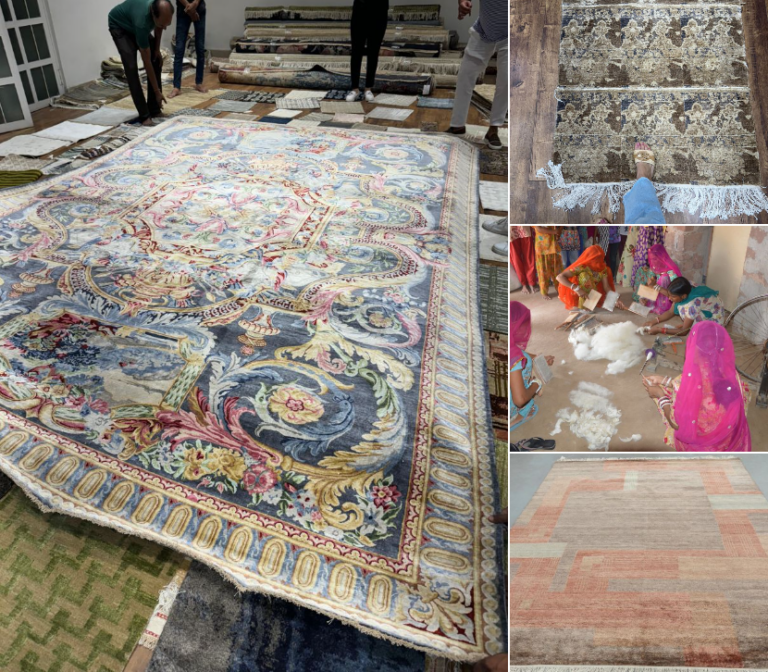
Why Hand-Knotted Rugs Are Expensive
The cost question is always valid.
📌 Here’s the honest answer.
1. Raw materials
We at Understorey use natural fibres – wool, silk, cashmere.
Machine-made rugs largely use polypropylene or acrylic – plastic-based yarns.
2. Labour
Hand-knotting requires multiple highly skilled weavers.
Each knot is tied manually.
Months of work.
3. Process
Dyeing, weaving, washing, finishing all human-driven.
There is no “switch on the machine and let it run.”
📍 You are paying for:
Skill acquired over decades
Time invested over months
Exclusivity
Longevity
It is labour-intensive by design.
